










8 Proven Ways to Sober Up From Weed
On this page
Key Takeaways
- Time is the ultimate cure. THC metabolizes naturally, and most intense effects fade within a few hours.
- Hydration, calm distractions, and a change of scenery ease anxiety and a racing heart.
- Edibles last 6–12 hours, with peak intensity around the 2-hour mark.
- Prevent future overconsumption with proper dosing knowledge and dispensary etiquette.
At Kolas, we talk with first-time and longtime customers every day, and one question comes up more than almost any other: “I think I took too much — what do I do now?” If that’s you right now, take a breath. What you’re feeling is uncomfortable, but it is temporary and manageable. This guide walks through exactly how to sober up from weed, why these methods work, and how to avoid this feeling next time.
What Does It Mean to Be Too High or “Green Out”?
A “green out” happens when THC overwhelms the brain’s CB1 receptors, triggering a wave of anxiety, dizziness, and physical discomfort. This is the body’s response to overstimulation of the endocannabinoid system, rather than a medical emergency, in most cases.
THC (tetrahydrocannabinol) binds to CB1 receptors concentrated throughout the brain and central nervous system. This interaction is responsible for many of the effects people associate with cannabis, including relaxation, altered perception, and euphoria. In small to moderate amounts, this interaction produces the relaxation and euphoria associated with cannabis use. At higher concentrations, especially with edibles or high-potency concentrates, THC can flood these receptors faster than the body can regulate the response, leading to an uncomfortable spike in physiological and psychological symptoms.
Common symptoms of greening out include:
- Intense paranoia or anxiety
- Rapid or pounding heart rate
- Dry mouth and dry, red eyes
- Dizziness or a spinning sensation
- Nausea or stomach discomfort
- Sweating or chills
- A feeling of being “stuck” in the high
These symptoms are unpleasant but typically resolve on their own as THC levels in the bloodstream decline.
How to Sober Up From Weed: 8 Actionable Methods
If you’re looking for how to sober up from weed right now, these eight methods are the most effective tools available, and they’re the same ones our budtenders walk customers through at the counter.
1. Give It Time
The most reliable way to come down is to let your body process the THC. Inhaled cannabis (smoking or vaping) typically peaks in blood concentration within 10–30 minutes and begins tapering off within 1–3 hours. The liver and bloodstream gradually metabolize THC into inactive byproducts, and the intensity of the high follows a predictable downward curve. Sitting with this knowledge that the worst will pass is often the single most effective tool for managing an uncomfortable high.
2. Sip Water and Avoid Stimulants
Stay hydrated with water, and steer clear of caffeine, energy drinks, and alcohol. Dehydration can intensify symptoms like dry mouth, headache, and dizziness, so small sips of water help the body feel more regulated. Caffeine raises heart rate and can amplify the anxious, jittery feeling that often accompanies a strong high. Alcohol, meanwhile, can interact unpredictably with THC, often deepening dizziness and nausea rather than offering relief.
3. Try Black Pepper or Lemon
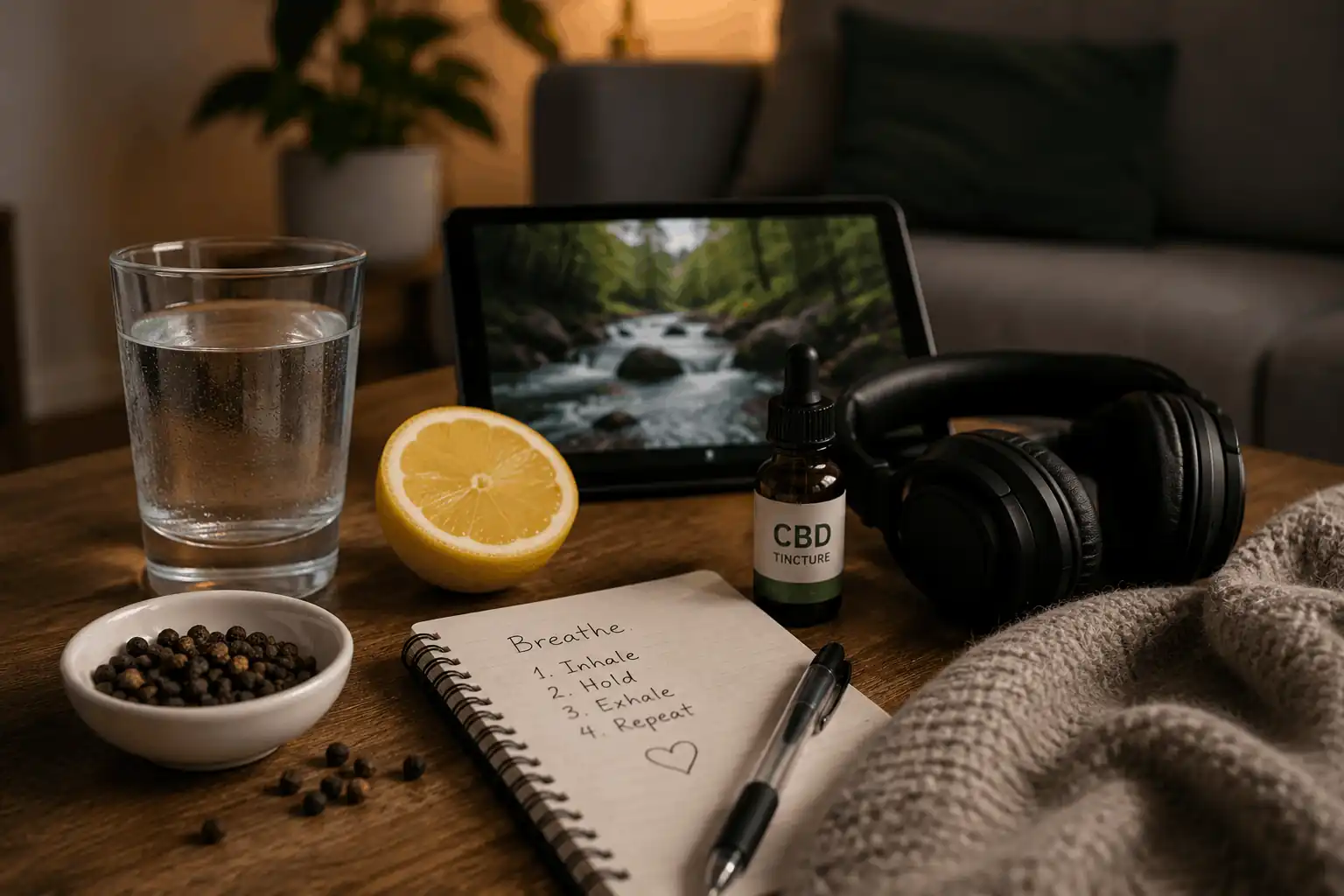
Smelling black pepper or sucking on a lemon wedge may help ease anxiety and mental fog associated with a high. This effect is rooted in terpenes, aromatic compounds found in both cannabis and other plants. Black pepper contains beta-caryophyllene, a terpene believed to promote a sense of calm and balance, which may help ease some of the uncomfortable feelings associated with a strong cannabis high. Lemon and other citrus peels are rich in limonene, a terpene commonly associated with uplifting aromas and a more positive, relaxed state of mind. While research is still developing, many users report that the strong sensory input from these scents helps “reset” an overwhelming high.
Many of our Kolas customers keep a small jar of peppercorns or a lemon on hand at home for exactly this reason. It’s a simple, low-cost tool worth having before you need it.
4. Distract Your Mind
Shifting your attention away from the high itself can reduce the spiral of anxious thoughts. Anxiety during a high often intensifies when a person fixates on how they’re feeling. Engaging in low-stakes, familiar activities gives the mind something else to focus on. Helpful distractions include:
- Watching a comforting, familiar TV show or movie
- Listening to calm, low-tempo music or a podcast
- Doing a simple, repetitive task like folding laundry
- Talking with a trusted friend about something unrelated to the high
5. Practice Grounding and Deep Breathing
Slow, deliberate breathing signals to the nervous system that it’s safe to relax, which can directly counter a racing heart and panic. Try inhaling for a count of four, holding for four, and exhaling for six, repeating this cycle for several minutes. Pair this with a grounding technique: name five things you can see, four things you can touch, three things you can hear, two things you can smell, and one thing you can taste. This shifts attention from internal panic to the immediate physical environment, which can interrupt anxious thought loops.
6. Use Fast-Acting CBD
CBD (cannabidiol) may help take the edge off a THC high by influencing how cannabinoids interact within the body’s endocannabinoid system. Many consumers report that CBD helps reduce feelings of anxiety, paranoia, and discomfort associated with an overly intense cannabis experience. Fast-acting formats like CBD tinctures or sublingual drops are absorbed more quickly than capsules, making them a practical option when symptoms feel overwhelming. This isn’t an instant “off switch,” but many people find it noticeably reduces the intensity of an uncomfortable high within 15–30 minutes.
If you don’t already have a fast-acting CBD tincture at home, our Sacramento team can point you toward low-dose options designed specifically for moments like this. Ask any Kolas budtender next time you’re in.
7. Eat a Balanced, Low-Fat Snack
A small snack with complex carbohydrates can help stabilize blood sugar and ease nausea or lightheadedness. Options like crackers, toast, or fruit provide steady energy without overwhelming the digestive system. Avoid heavy, high-fat foods in the moment. A light snack is often easier on the stomach and may help you feel more comfortable while waiting for the effects to subside. Save the cheeseburger for after you’re feeling level again.
8. Change Your Environment
A change of scenery, especially a cool shower or a quiet, familiar room, can provide immediate physical and mental relief. A lukewarm or cool shower can lower body temperature and ease the sweating or chills that sometimes accompany a strong high. Moving to a calm, dimly lit space away from crowds or noise reduces sensory overload, giving your nervous system room to settle.
How Long Do Edibles Last in Your System?
Edible highs typically last between 6 and 12 hours total, with peak effects occurring around the 2-hour mark after consumption. This extended timeline, compared to inhaled cannabis, is the primary reason edibles catch many users off guard — especially beginners who consume more before the first dose has fully kicked in.
| Consumption Method | Onset Time | Total Duration |
| Inhaled (smoking/vaping) | 1–10 minutes | 1–3 hours |
| Edibles | 30 minutes–2 hours | 6–12 hours |
| Concentrates (dabs) | 1–5 minutes | 2–4 hours |
The extended duration and intensity of edibles come down to how the body processes them. When THC is eaten, it passes through the digestive system and liver before entering the bloodstream. This process creates compounds that can produce a stronger and longer-lasting experience compared to inhaled cannabis. This conversion process explains both the delayed onset of edibles and their more intense, prolonged impact.
This is also exactly why our Kolas budtenders ask new edible customers about their experience level before recommending a dose. A 10mg gummy can feel very different from a 10mg vape hit, and we’d rather you start low and feel good than start high and end up here.
When Should You Seek Medical Help?
While knowing how to sober up from weed resolves the vast majority of uncomfortable highs, it’s worth being clear about when home strategies aren’t enough and professional care is the right call.
Seek immediate medical attention if you experience chest pain, severe difficulty breathing, fainting, or a seizure. These symptoms are not typical effects of a green out and should be treated as a medical emergency, regardless of cannabis involvement. Call 911 or go to the nearest emergency room.
Contact a medical professional or Poison Control if symptoms are severe but not immediately life-threatening. This includes situations such as:
- Vomiting that won’t stop or shows signs of dehydration
- Confusion or disorientation that doesn’t improve after a few hours
- A panic response that feels uncontrollable despite grounding techniques
- Accidental consumption by a child, pet, or someone who didn’t intend to use cannabis
Poison Control (1-800-222-1222) is available 24/7 and can walk you through the next steps even if you’re unsure whether the situation is an emergency. There is no shame in calling; they exist precisely for situations like this, and reaching out doesn’t mean you did anything wrong.
If you’re a Kolas customer and you’re not sure whether what you’re feeling is normal, you can also call the dispensary directly during business hours and ask to speak with a budtender. We’ve talked countless customers through this exact moment, and we’d rather you call than worry alone.
Prevention: Tips for Your First Time at a Dispensary
Understanding how to navigate a legal dispensary can prevent overconsumption before it starts, and a little preparation goes a long way toward a comfortable, controlled experience from your very first visit to Kolas.
Essential Dispensary Etiquette for Beginners
- Bring a valid, physical government-issued ID — digital copies are typically not accepted.
- Do not consume any cannabis products on dispensary premises; most locations, including Kolas, prohibit on-site use entirely.
- Avoid using your cell phone at the counter while being served, as a courtesy to staff and other customers.
- Have a general budget and purpose in mind (relaxation, sleep, social use) before you arrive.
- Tip your budtender if the service was helpful and informative — many dispensaries accept cash or card tips.
How to Talk to Your Budtender
Be specific about your experience level and tolerance, and don’t hesitate to ask for guidance. Budtenders are trained to match products to individual needs, but they can only do so with accurate information. If you’re new or have had an uncomfortable experience before, say so directly — our Kolas team would always rather slow down and ask questions than send you home with something too strong.
Useful phrases include asking for “low-milligram options,” ideally under 5mg of THC per serving for edibles, or requesting “1:1 THC-to-CBD” products, which contain balanced ratios designed to soften THC’s psychoactive intensity. Mentioning specific terpenes like products higher in beta-caryophyllene or limonene can also help a budtender steer you toward something calming rather than intensifying.
Frequently Asked Questions
Can you instantly reverse a THC high?
No, no method instantly reverses a THC high. The body must metabolize THC over time, and while strategies like CBD, hydration, and grounding techniques can ease discomfort, none of them remove THC from the bloodstream immediately.
Does taking a cold shower shock you sober?
A cold or cool shower doesn’t remove THC from your system, but it can provide real physical relief from symptoms like sweating, overheating, and dizziness. The sensory shift can also help interrupt anxious thought patterns, making the experience feel more manageable even though it doesn’t change THC levels in the blood.
What should I do if my anxiety feels severe?
If anxiety or physical symptoms feel severe, overwhelming, or don’t improve with time, reach out to a trusted person nearby or contact a medical professional. Refer to the “When Should You Seek Medical Help?” section above for specific warning signs and resources, including Poison Control at 1-800-222-1222.