











How to Make Hash: Step-by-Step Guide From Flower or Kief
On this page
Key Takeaways
- What is kief? Kief is the powdery collection of cannabis trichomes that naturally separate from the flower during handling or grinding.
- Kief vs hash: Kief is loose trichome material, while hash is compressed and refined trichomes formed into a dense resin concentrate.
- The easiest way to make hash at home is by pressing clean kief with parchment paper, heat, and pressure.
- Solventless extraction methods, such as dry sift and bubble hash, avoid chemical solvents and preserve cannabinoids and terpenes naturally.
What Is Kief? Understanding the Golden Dust
Kief is the loose, powdery accumulation of resinous trichomes that detach from cannabis flower buds during grinding, handling, or storage.
Many cannabis consumers encounter kief at the bottom of a grinder and wonder whether it is simply leftover plant material. In reality, kief contains some of the most valuable parts of the cannabis plant.
Trichomes are tiny resin glands that cover cannabis flowers. These microscopic structures contain high concentrations of cannabinoids such as THC and CBD, along with aromatic terpenes responsible for flavor and aroma.
The biological purpose of trichomes is to protect the plant from pests, UV exposure, and environmental stress. For consumers, these resin glands represent the most potent portion of the flower.
Typical cannabis flower often contains between 15% and 25% THC, depending on the cultivar and growing conditions. Pure kief can contain THC concentrations ranging from 50% to 70%, making it significantly more potent than flower alone.
Understanding what kief is is the first step toward understanding how to make hash and why hash has been valued across cannabis cultures for centuries.
Kief vs Hash: What Is the Main Difference?
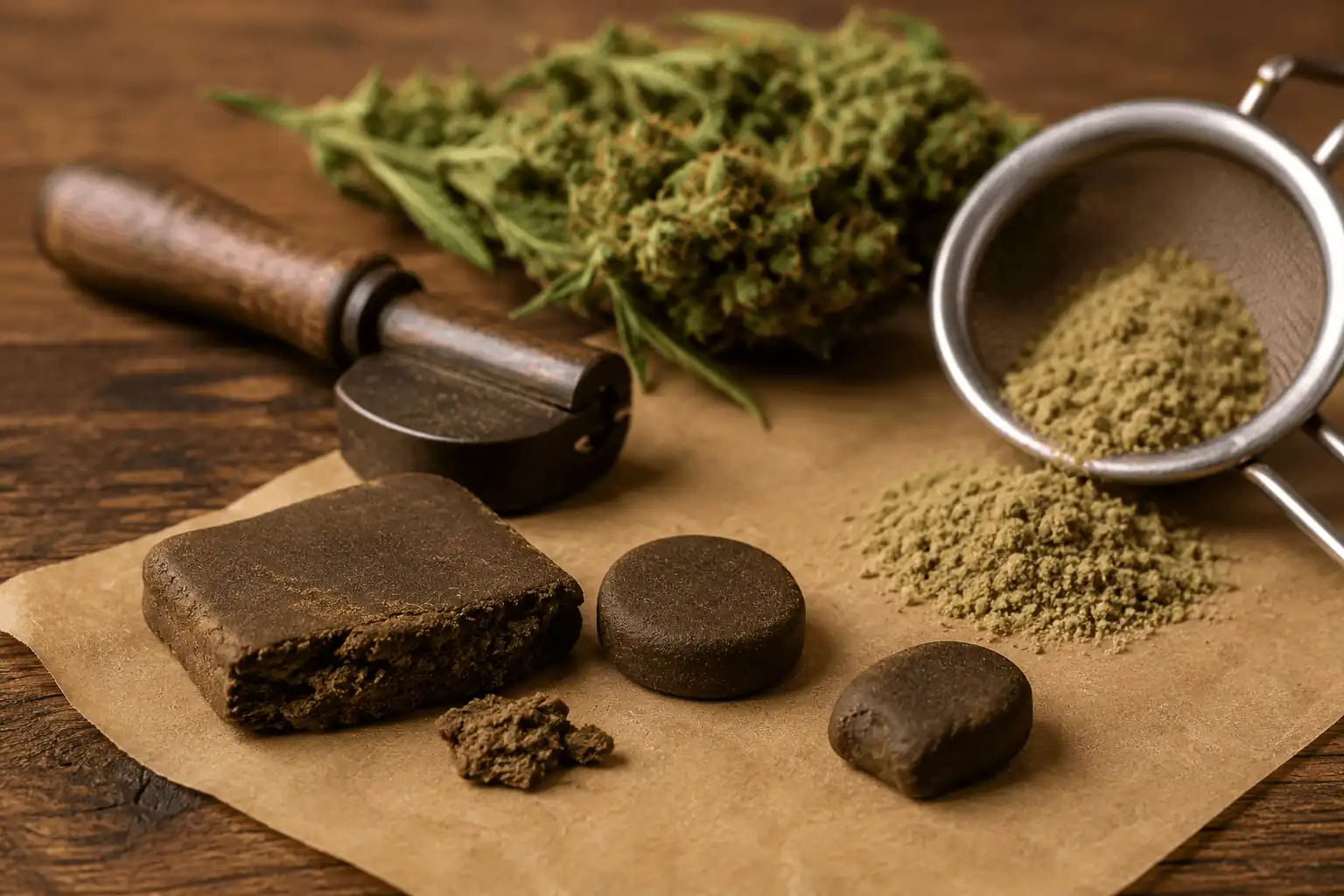
The primary difference between kief and hash is that kief remains loose and unprocessed, while hash is created by collecting, refining, and compressing trichomes into a solid concentrate.
While both products originate from the same resin glands, the manufacturing process changes the texture, handling characteristics, and overall experience.
| Attribute | Kief | Hash |
| Form / Texture | Loose powder | Compressed resin block |
| THC Potency Range | 50%–70% | 30%–70%+ |
| Shelf Life | Moderate | Longer when stored properly |
| Purity Level | Contains some plant matter | More refined and concentrated |
| Consumption Method | Sprinkled on the flower, vaporized | Smoked, vaporized, or mixed with flower |
The discussion around kief vs hash often focuses on potency, but texture and experience matter too.
When trichomes are compressed into hash, heat and pressure encourage oils and terpenes to bind together. This creates a smoother, slower burn and often enhances the entourage effect, the synergistic interaction between cannabinoids and terpenes.
For many enthusiasts, hash offers a richer and more traditional cannabis experience compared to loose kief.
How to Make Hash From Kief: Simple At-Home Methods
Learning how to make hash from kief is surprisingly simple because traditional hash making relies on heat, pressure, and patience rather than chemical solvents.
Hash making is one of the oldest forms of solventless extraction. These methods focus on preserving cannabinoids and terpenes while naturally transforming loose trichomes into a concentrated resin.
1. The Hand-Pressing Method (The Traditional Way)
This method uses body heat and pressure to gradually transform kief into hash.
Steps:
- Gather clean, dry kief.
- Place the kief inside a folded piece of parchment paper.
- Fold the parchment tightly around the material.
- Hold and press the packet between your palms.
- Apply steady pressure and friction for 10–20 minutes.
- Open the parchment periodically and knead the material.
- Continue until the kief darkens and forms a pliable resin ball.
The warmth from your hands helps rupture trichome heads, releasing oils that bind the material together.
2. The Shoe/Parchment Paper Method (The Classic DIY Trick)
This traditional technique uses body heat and walking pressure to compress trichomes naturally.
Steps:
- Place dry kief inside folded parchment paper.
- Seal the packet securely.
- Insert the packet into the heel section of a shoe.
- Walk normally for several hours.
- Remove and inspect the material.
- Repeat if additional compression is desired.
The combination of body heat, pressure, and time encourages resin glands to fuse into a compact hash piece.
3. The Mechanical Pollen Press Method (The Pro Setup)
A pollen press provides the most consistent way to make dense, professional-looking hash.
Steps:
- Fill the pollen press chamber with clean kief.
- Assemble the press according to the manufacturer’s instructions.
- Tighten the press gradually using even pressure.
- Allow the compressed material to sit for several hours.
- Apply gentle heat between 160°F and 180°F if desired.
- Remove the finished hash puck.
Many experienced consumers prefer this method because it creates highly uniform hash while preserving cannabinoid content.
Advanced Methods: Making Hash Directly From Flower
Experienced producers often create hash directly from flower rather than collecting kief first.
These techniques are widely respected throughout the cannabis industry and represent some of the purest forms of solventless extraction.
Dry Sift Hash (The Moroccan Mesh Screen Technique)
Dry sift hash is created by gently agitating cannabis flower over fine mesh screens.
As the flower moves across the screen, trichomes separate from the plant material and fall through. Multiple screen sizes help improve purity and remove unwanted contaminants.
The resulting material can be pressed into traditional hash blocks or consumed as loose dry sift.
Bubble Hash (The Cold-Water and Ice Filtration Method)
Bubble hash uses ice water and filtration bags to separate trichomes from the flower.
The cold temperatures make resin glands brittle, allowing them to detach from the plant material. The mixture is then filtered through increasingly fine mesh bags to collect different grades of trichomes.
Bubble hash is often graded using a 1-to-6 star scale:
| Grade | Description |
| 1 Star | Cooking grade |
| 2 Star | Low-grade hash |
| 3 Star | Medium quality |
| 4 Star | Half melt |
| 5 Star | Near full melt |
| 6 Star | Full melt premium resin |
Full melt bubble hash leaves minimal residue when vaporized and is often considered one of the highest-quality solventless extraction products available.
Frequently Asked Questions
How much kief do you need to make a block of hash?
Most home producers use between 5 and 10 grams of kief to create a small block of hash.
The final size depends on compression level, moisture content, and desired density.
Can you smoke hash on its own, or do you need to mix it with flower?
Hash can be consumed on its own or combined with flower.
Many consumers crumble small amounts into joints, bowls, or vaporizers, while others smoke hash independently using specialized pipes.
Does pressing kief into hash increase its actual THC percentage?
No, pressing kief into hash does not significantly increase THC concentration.
The process changes texture, density, and handling characteristics, but the cannabinoid content remains largely similar unless additional purification occurs.
How should you store homemade hash to keep it fresh?
Store homemade hash in an airtight container away from heat, oxygen, moisture, and direct sunlight.
Cool, dark environments help preserve cannabinoids, terpenes, and overall quality. Properly stored hash can maintain freshness for many months.
Learning how to make hash allows cannabis consumers to appreciate one of the oldest forms of concentrate production. Whether you choose hand pressing, a pollen press, dry sift, or bubble hash, each method relies on the same principle: collecting and concentrating trichomes through solventless extraction. Once you understand what kief is and the differences in kief vs hash, producing traditional hash at home becomes far more approachable and rewarding.