











Kief vs Hash: What’s the Difference & How to Use or Make Them
On this page
Key Takeaways
- Kief is the loose, powdery accumulation of cannabis trichome heads that sift free from the flower, potent, immediate, and versatile.
- Hash is what happens when that raw kief is purified and compressed under heat and pressure, transforming microscopic dust into a solid, cohesive concentrate.
- The easiest ways to use kief are crowning a bowl, twaxing a joint, or coating moon rocks, all of which require no equipment.
- The secret to making full-melt hash at home is electrostatic separation before compression: removing green plant contamination is the step most home extractors skip, and it’s the one that changes everything.
Every cannabis consumer eventually ends up staring at the fine golden powder collecting at the bottom of their grinder and wondering what to do with it. That powder is kief, and understanding the difference between kief vs hash is the gateway to getting significantly more out of every gram of cannabis you buy. This guide covers both concentrates from the ground up: what each one is, how they compare chemically and practically, how to use kief today with what you already own, and how to make genuine pressed hash from kief at home using techniques that professional extractors rely on.
What Is Kief? The Potent Dust of the Cannabis Plant
Kief is the accumulation of loose, powdery resin glands called trichomes that physically detach from the cannabis flower when it is handled, ground, or mechanically agitated.
To understand what kief actually is, it helps to understand what’s living on the surface of a cannabis bud. Cannabis flowers are covered in capitate-stalked trichomes: microscopic glandular structures that look, under magnification, like tiny mushrooms growing from the plant’s outer surface. Each trichome consists of a thin stalk topped by a spherical head, and that head is where the plant concentrates the majority of its cannabinoids (THC, CBD, CBG) and aromatic terpenes. The waxy outer membrane of the trichome head, called the cuticle, acts as a protective shell around a dense reservoir of resinous oil.
When cannabis is ground or sifted, these fragile trichome heads break away from their stalks and accumulate as a fine, light-colored powder. That powder is kief. The color ranges from pale gold to light green, depending on how much residual plant material, leaf fragments, and chlorophyll are mixed in. Purer kief skews toward a creamy or golden blonde. Greener kief contains more plant debris and is considered lower grade.
From a potency standpoint, the difference between flower and kief is substantial. Typical cannabis flower tests between 15–25% THC. Raw kief, even unrefined, straight from a three-chamber grinder, commonly reaches 40–60% THC, simply because you’ve mechanically separated the most concentrated parts of the plant from the rest of it.
What Is Hash? Cannabis’s Oldest Concentrate
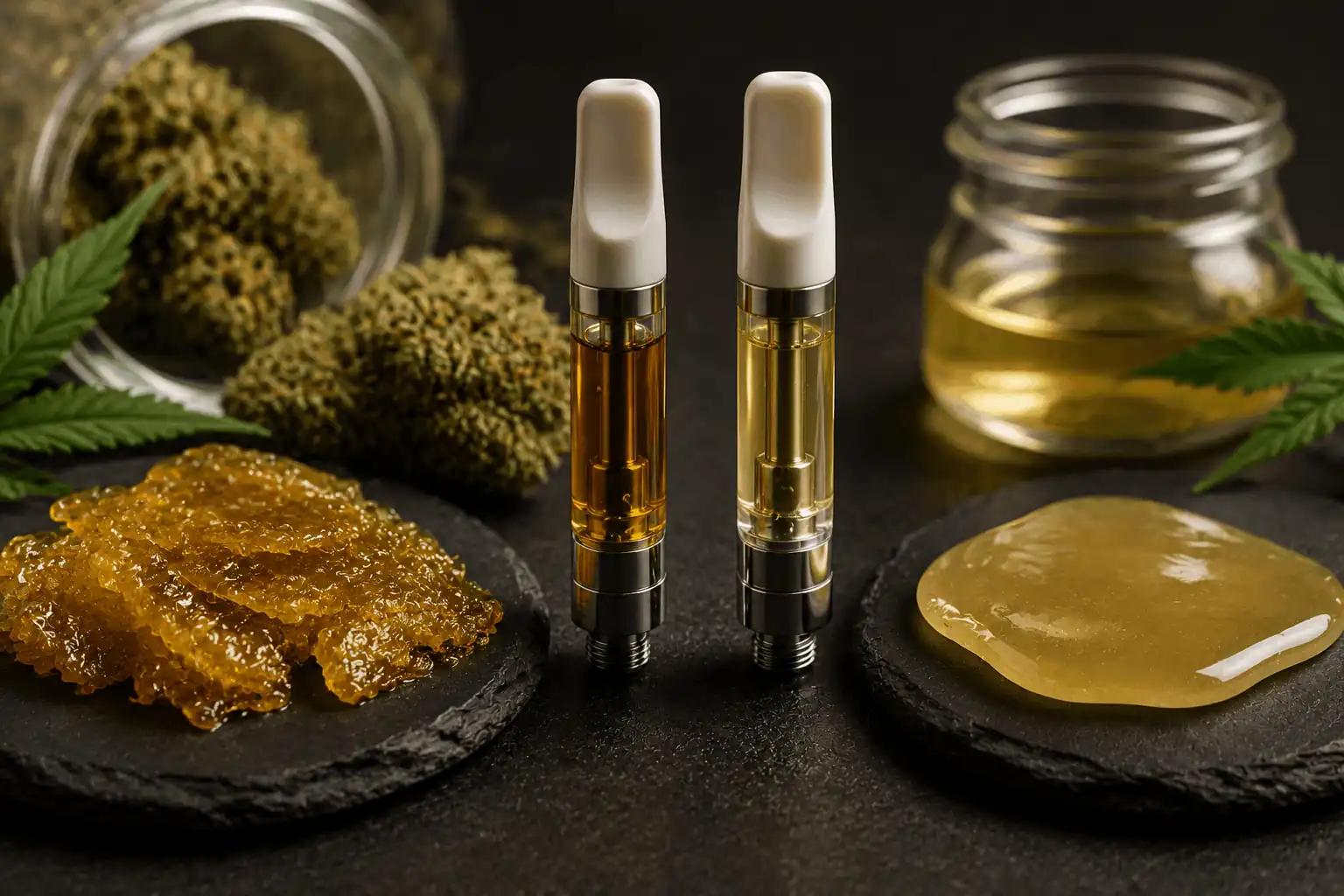
Hash (short for hashish) is a concentrated cannabis extract made by collecting, purifying, and compressing trichome heads, the same resin glands that make up kief, into a solid, stable mass that is far more potent and longer-lasting than raw flower.
Hash is not a modern invention. It is arguably the world’s oldest cannabis concentrate, with documented use tracing back to at least the 10th century in Central Asia and the Middle East, where it was produced by hand-rubbing live cannabis plants to collect the sticky resin directly onto the palms, a method still practiced today in regions of India and Nepal, where it’s known as charas. Traditional Moroccan and Afghan hash was made through dry-sifting techniques nearly identical to what home extractors still use today, then compressed into bricks and bars for trade and transport.
What changed in the modern era is precision. Contemporary hash production introduced micron-specific screens, ice-water separation, controlled curing environments, and temperature-calibrated presses that allow extractors to isolate specific fractions of trichome heads and transform them into products that bear little visual resemblance to the dark, dense bricks that defined hash for centuries but share the same foundational chemistry.
Kief vs Hash: What Is the Fundamental Difference?
Kief is loose, unrefined trichome crystals that still contain residual plant material and carry only mechanical separation behind them. Hash is what happens when that raw kief is deliberately purified, collected, and compressed into a solid, stable, cohesive mass.
The kief vs hash distinction isn’t just about form — it’s about what compression actually does to the material at a molecular level, which the next section covers in detail. At a practical level, here’s exactly how they compare side by side:
| Attribute | Raw Kief | Pressed Hash |
| Form / Texture | Fine, loose powder | Solid block, ball, or slab |
| Average Potency | 40–60% THC | 50–80% THC (varies by grade) |
| Processing Level | Single-step mechanical sift | Multi-step: sift, purify, compress, cure |
| Burn Rate | Burns fast, difficult to handle | Slow, controlled, easy to portion |
| Best Consumption Method | Bowl topping, joint rolling | Bowl, pipe, dab rig, hot knife |
The practical takeaway when weighing kief vs hash: kief is the raw ingredient. Hash is the finished product made from it. Neither is inherently better; they serve different purposes and suit different consumers.
The Physics of Trichome “Melting” (Why Pressing Actually Works)
Making hash isn’t simply packing dust into a shape — it’s a thermal-mechanical reaction that permanently fuses individual trichome cells into a single, airtight substance.
Here’s what’s actually happening at a microscopic level when you press kief:
The “Cuticle” Break
Each trichome head is essentially a tiny, waxy biological balloon. The outer membrane, the cuticle, is a rigid, waxy shell whose job is to protect the liquid cannabinoids and terpenes stored inside. In their raw state as kief, these heads remain largely intact: thousands of individual, intact resin capsules loosely piled together.
The Fusion Process
When you apply controlled low heat between 160°F and 180°F alongside mechanical pressure, those waxy cuticles rupture simultaneously across the entire mass. The liquid resinous oil inside each trichome head is forced outward. With nowhere to go, these released oils fuse with the oils from every surrounding ruptured head, merging into a single, homogeneous, airtight mass. The microscopic powder doesn’t just stick together; it biochemically integrates into something new. That’s hash.
This also explains why temperature precision matters. Too cool, and the cuticles don’t fully rupture, you get a crumbly, poorly integrated product. Too hot, and the volatile terpenes that carry flavor and aroma simply burn off before they can be sealed inside the mass.
How to Use Kief: From Daily Rituals to Infused Creations
Kief is one of the most versatile cannabis products available because it requires no additional processing. It can be added to nearly any consumption method to immediately increase potency and effect.
Here’s how to use kief effectively across common formats:
Crowning a Bowl
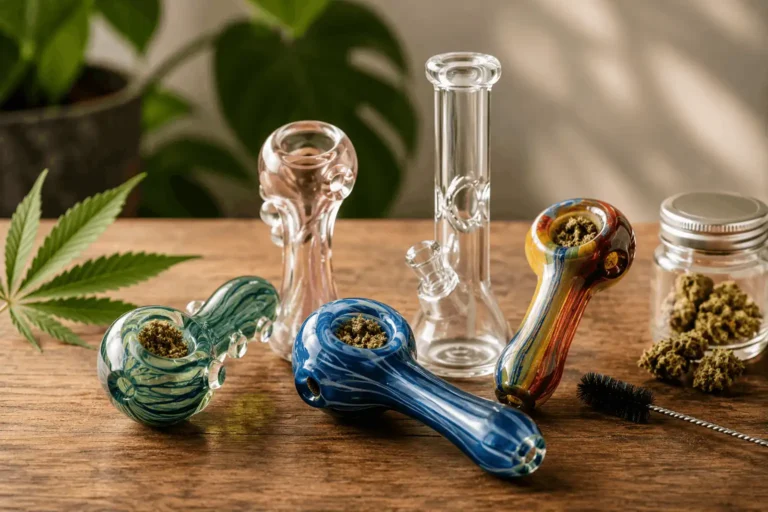
Pack your pipe or bong with flower as usual, then press a thin layer of kief on top, not directly on the bottom where the flame hits first. Layering kief between the flower and a final cap of flower protects the kief from direct flame combustion, allowing it to vaporize more evenly and cleanly. This is the most efficient use of kief for everyday consumers.
Twaxing Joints
Roll your joint normally, then lightly coat the outside of the paper in cannabis concentrate (live resin, hash oil, or even honey in a pinch), and roll it in kief before it dries. The outer layer burns at a slower, more even rate than the paper alone, extending the session and dramatically increasing potency without any internal restructuring of the joint.
Making Moon Rocks
Take a whole, dense cannabis nug. Dip or drizzle it in cannabis concentrate until fully coated. While still tacky, roll it in kief until the entire bud is encased. Let it dry, then break it apart. Never grind a moon rock, and place pieces directly in a bowl. Moon rocks typically test above 50% THC and are not a format for beginners or those with low tolerance.
How to Make Hash From Kief: A Step-by-Step Guide
This is where kief vs hash stops being a comparison and becomes a craft. What follows is a practical, technically grounded approach to making genuine pressed hash at home, starting before you even touch a sieve.
Step 1: Selecting Genetics Specifically for Sifting
THC percentage alone is a poor predictor of hash quality. Trichome structure, resin density, and cuticle thickness are what determine whether a strain makes excellent hash or a mediocre crumble.
Modern solventless extractors specifically seek out what the community calls “hash-forward genetics” cultivars whose trichome heads are large, densely packed, and topped by thick waxy membranes that separate cleanly from their stalks during agitation rather than shattering. Strains with fragile, narrow stalks tend to produce kief contaminated with broken stalk material, which kills the melt quality.
Look for cultivars with established reputations in the solventless space: GMO crosses, Papaya, Slurricane, and Zkittlez-derived genetics consistently produce the large-headed, thick-cuticle trichomes that separate cleanly and fuse fully under pressure. Asking your Kolas budtender about which of our current flower inventory is known for resin production is a direct shortcut to this information.
Step 2: Static Electricity Separation (The “Parchment & DVD Case” Hack)
The single biggest quality gap between amateur and professional hash is plant matter contamination, and the fastest way to close that gap at home costs nothing.
Raw kief from a household grinder, even a quality three-chamber model, contains a meaningful percentage of chlorophyll-rich leaf fragments, broken stalks, and other green debris. When this material is pressed into hash, it burns harshly, produces a thick, unpleasant smoke, and prevents the trichome heads from fusing cleanly. This is the primary reason most home-pressed hash looks green and smokes roughly.
Static Sift Tech — Electrostatic Separation removes this contamination without any additional screens or equipment:
- Take a clean, rigid plastic surface, a DVD case works perfectly, and wrap it in food-safe parchment paper with the silicone side facing outward.
- Rub the wrapped surface briskly against a piece of 100% cotton fabric for 15–20 seconds to build an electrostatic charge.
- On a clean, flat surface, spread your raw kief in a thin, even layer.
- Hold the charged DVD case at roughly a 45-degree angle above the kief and slowly pass it across the pile, hovering approximately one to two centimeters above the surface.
- The electrostatic charge selectively attracts the lightweight, pure trichome heads — which are almost entirely lipid and resin — while the heavier, moisture-containing plant debris remains behind on the surface.
- Collect the material that clings to the parchment by tapping it gently onto a clean sheet.
Done correctly, a single pass of this technique can visibly transform green, contaminated kief into a pale, cream-colored powder that melts cleanly rather than chars. Extractors describe this as moving from “3-star” to “5-star” quality in a single step.
Step 3: Thermal Compaction (The Pollen Press or Parchment Method)
Apply controlled heat and steady mechanical pressure to the static-cleaned kief to trigger the trichome cuticle rupture described above.
Two practical approaches work well at home:
Pollen Press Method: A mechanical pollen press, a small, cylindrical metal tool available inexpensively online, allows you to load cleaned kief into the chamber and apply screw-tightened pressure over 24–48 hours without any heat. Cold-pressing produces a more terpene-rich result since no volatiles are lost to heat, but the integration is less complete. The resulting puck will be denser than raw kief but may still crumble at the edges.
Hair Straightener / Parchment Method: Fold a quantity of cleaned kief inside a square of food-grade parchment paper. Set a hair straightener to its lowest available temperature, target 160°F to 180°F, verified with an infrared thermometer if possible. Apply firm, even pressure for 3–7 seconds, release, flip the folded parchment, and repeat. The kief will fuse visibly between presses, darkening slightly in color as the cuticles rupture and the oils integrate. Multiple short presses produce better integration than a single long one.
Step 4: Oxidation Chemistry and the “Terpene Lock” (Curing Your Hash)
Freshly pressed hash is not finished hash. The cure is where the flavor profile develops, and the harsh top notes of volatile monoterpenes responsible for the sharp, acrid smoke of fresh-pressed product stabilize into something genuinely refined.
When the hash leaves the press, it carries an outer shell that has been partially sealed by the fusion process. But internally, the volatile monoterpenes (lighter aromatic molecules) are still unstable. If you smoke fresh-pressed hash immediately, you’ll notice a sharpness — sometimes described as “green” or “chemical” that experienced consumers find unpleasant.
The Terpene Lock cure addresses this. The pressed exterior shell acts as a natural protective barrier against oxygen and light. Wrapping the fresh hash ball tightly in food-grade cellophane or vacuum-sealing it and storing it in a dark environment at 50°F to 60°F for two weeks allows the internal terpene profile to slowly mature and stabilize. Heavier, more complex sesquiterpenes, the molecules responsible for earthy, spicy, and woody notes, become proportionally more prominent as the lighter monoterpenes gradually stabilize. The result is the characteristic deep notes of sandalwood, leather, and spice that distinguish traditional aged hash from any commercially pressed product.
The Modern Standard: A Nod to Piatella
Think of Piatella as a luxury, ultra-refined version of traditional hash.
Piatella represents one of the highest-quality forms of solventless cannabis concentrate currently available.
Unlike traditional pressed hash, Piatella starts with premium ice-water hash collected from the highly sought-after 73 to 120 micron trichome fraction. These trichome heads are large, resin-rich, and exceptionally clean.
Instead of using heat, the material is sealed and cold-cured between 39°F and 50°F for several weeks.
During this process, the trichomes slowly release internal oils and terpenes. Extractors often describe this process as “sweating.”
The texture gradually transforms from loose granules into a creamy, buttery concentrate that resembles soft wax.
The final product delivers:
- Exceptional terpene preservation
- Intense aroma
- Smooth texture
- High cannabinoid concentration
Although Piatella represents the cutting edge of solventless extraction, it still follows the same basic principle behind traditional hash: collecting and concentrating trichomes while preserving as much resin quality as possible.
Frequently Asked Questions
Can you press kief into hash without adding heat?
Yes, cold-pressing kief using a pollen press applies mechanical pressure alone and produces a cohesive puck without any external heat. The trade-off is that cold-pressed hash integrates less completely than heat-pressed hash, since the trichome cuticles don’t fully rupture without thermal activation. Cold-pressed products tend to be more crumbly and less homogenous, but they preserve a fuller terpene profile since no volatiles are lost to heat.
Why does my homemade hash look green instead of golden or brown?
Green color in pressed hash almost always indicates high plant matter contamination — specifically chlorophyll from broken leaf fragments and stalks that passed through the sieve alongside the trichome heads. The fix is the static sift technique outlined in Step 2 above. Purer kief, closer to isolated trichome heads with minimal plant debris, presses into a product that ranges from light tan to dark brown, depending on genetics and oxidation, never grass-green.
Is hash more potent than kief?
When comparing kief vs hash on potency, well-made hash from high-quality, clean kief generally tests higher in total cannabinoids than the raw kief it was made from, because the compression and purification process removes remaining non-cannabinoid plant material, concentrating active compounds per gram. Premium full-melt hash can reach 70–80% total cannabinoids. That said, poorly made hash from contaminated kief can test lower than clean, well-sifted raw kief — input quality always determines output quality.
What micron bag size is best for separating kief from flower?
For collecting general-purpose kief at home, a 150-micron screen is a practical entry point that captures most trichome heads while filtering out most visible plant debris. For higher-grade separation aimed at hash production, a two-stage approach is more effective: a 160–220-micron bag for the initial bulk sift, followed by a 73–120-micron bag to collect the premium trichome head fraction. The 73–120 micron fraction is what professional extractors target as the foundation for full-melt and Piatella-grade products.