









Hemp Dispensary vs. Licensed Dispensary in Sacramento: What Shoppers Need to Know About Safety, Quality, and Legality
On this page
Cannabis shoppers are seeing a confusing mix of terms online and in storefronts: hemp dispensary, THCA flower, hemp-derived THC, licensed dispensary, and regulated cannabis. At a glance, some products may look similar. A jar of hemp THCA flower can resemble dispensary cannabis. A hemp-derived gummy may use familiar cannabinoid language. A smoke shop may even use cannabis-style branding.
But in California, the difference between a hemp dispensary and a licensed dispensary California consumers can trust is not just branding. It is a difference in legal oversight, product testing, potency verification, age-gated access, tax accountability, and consumer protection.
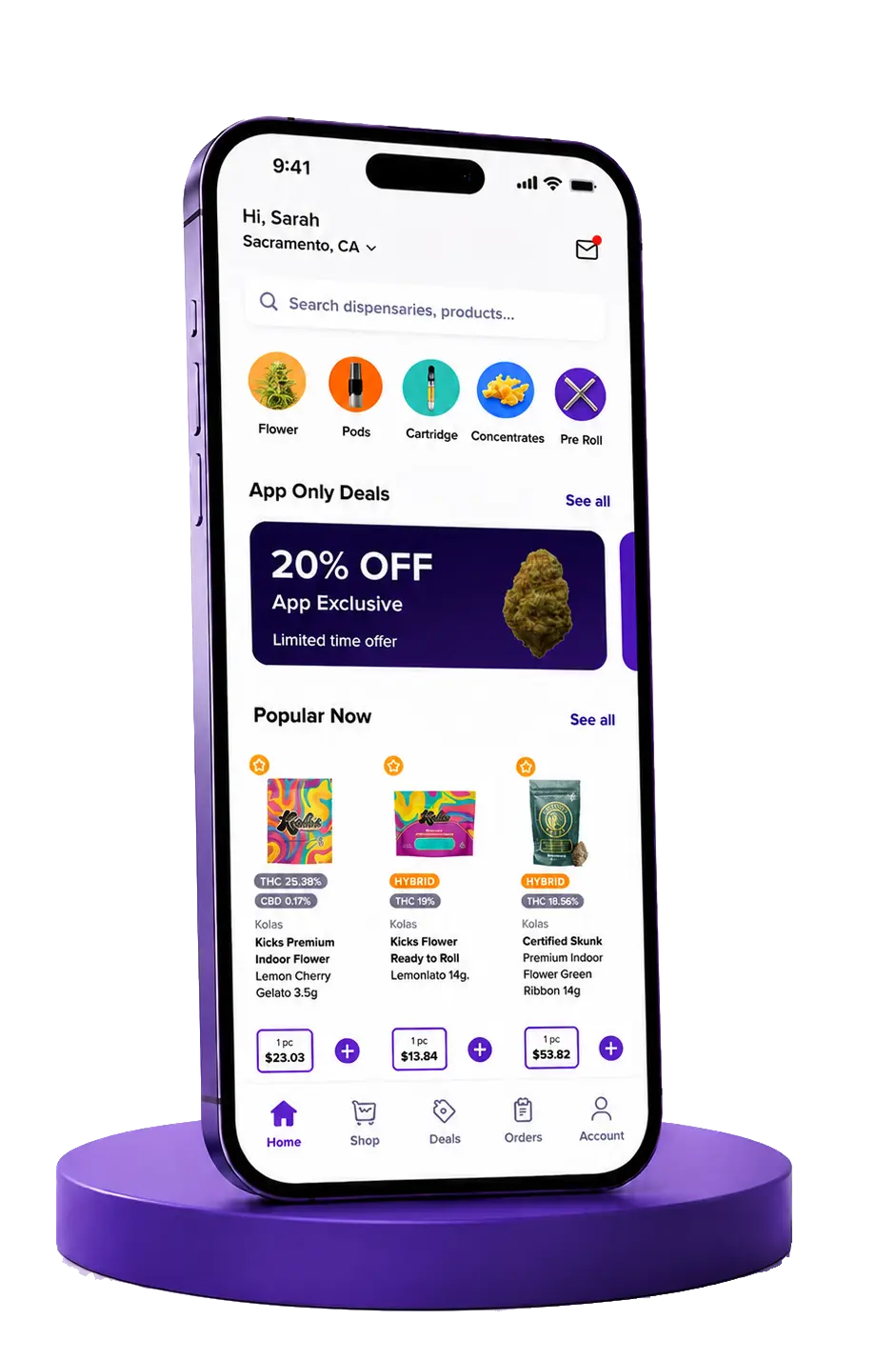
For Sacramento shoppers, that distinction matters. Buying from a legal Sacramento dispensary means your product comes through California’s regulated cannabis system, not a loosely defined hemp marketplace that has historically relied on federal gray areas. KOLAS is a licensed cannabis dispensary and delivery store in Sacramento, offering in-store pickup and delivery for flower, vapes, edibles, pre-rolls, concentrates, and beverages.
Key Takeaways: Hemp Dispensary vs Dispensary
- A hemp dispensary is not the same thing as a California-licensed cannabis dispensary.
- Federal hemp law originally defined hemp by its delta-9 THC concentration, creating room for intoxicating hemp products to be marketed outside state cannabis systems.
- California’s licensed cannabis products must pass DCC-required testing before retail sale, including testing for cannabinoids, pesticides, heavy metals, microbes, mycotoxins, solvents, and more.
- THCA vs dispensary cannabis can be misleading because THCA converts into delta-9 THC when heated.
- Buying from a licensed cannabis dispensary Sacramento shoppers recognize helps support local compliance, safety standards, and tax-funded community systems.
Hemp Dispensary vs Dispensary: Why the Confusion Exists
The phrase hemp dispensary vs dispensary often creates confusion because hemp and marijuana both come from the same plant species, Cannabis sativa L. The legal difference has historically depended less on appearance and more on chemistry, classification, and regulation.
Under the 2018 Farm Bill framework, hemp was defined as cannabis and cannabis derivatives containing no more than 0.3% delta-9 THC on a dry weight basis. That narrow delta-9 standard helped create a market for products that could be sold as “hemp” while still producing intoxicating effects through THCA, delta-8 THC, hemp-derived delta-9 THC, or other cannabinoid formulations.
A licensed cannabis dispensary is different. In California, a licensed dispensary is part of the state-regulated cannabis supply chain. Products are cultivated, manufactured, distributed, tested, labeled, tracked, and sold under rules enforced by the California Department of Cannabis Control, often called the DCC.
That means the real question is not simply “Is this cannabis or hemp?” The better question is: Was this product produced and sold through a regulated system designed to verify safety, potency, labeling, and legal compliance?
The Legal Landscape: Federal Farm Bill Loopholes vs California DCC Rules
The Federal Hemp Framework Created a Gray Area
The 2018 Farm Bill separated hemp from marijuana by setting a delta-9 THC threshold. That approach made sense for industrial hemp, CBD, fiber, seeds, and non-intoxicating hemp use. But it also left gaps for products that were technically below the delta-9 THC limit at one point in the supply chain yet could still become intoxicating when used.
That is where THCA products became a major topic. THCA is the acidic precursor to THC. On its own, THCA is not the same as activated delta-9 THC. But when heated through smoking, vaping, or cooking, THCA undergoes decarboxylation and converts into THC. This is why a product marketed as “hemp THCA flower” can still feel very similar to traditional cannabis once consumed.
Federal law has continued to evolve. Amendments approved in 2025 are scheduled to shift hemp definitions toward total THC, including THCA, and restrict certain hemp-derived cannabinoid products after a delayed effective date. For consumers, the bigger point is clear: intoxicating hemp products have been legally unstable because they sit at the intersection of hemp law, cannabis law, and changing enforcement priorities.
California Takes a Stricter Approach
California has built one of the country’s most detailed cannabis regulatory systems. Licensed cannabis retailers must operate within DCC rules, local permitting, age verification, packaging standards, inventory tracking, and testing requirements.
California has also taken action against intoxicating hemp products sold outside the regulated cannabis system. In 2024, California announced emergency regulations requiring retailers to stop selling industrial hemp food, beverage, and dietary products intended for human consumption if they contain any detectable THC or other intoxicating cannabinoids per serving. The rules did not ban non-intoxicating CBD products with no detectable THC, and they did not affect cannabis products sold through licensed dispensaries.
That distinction is important. Products that combine CBD and THC can remain available in California, but they belong in the licensed cannabis channel, not in an unregulated checkout lane.
For shoppers comparing a hemp storefront with a licensed Sacramento dispensary, the difference is not just legal language. It is whether the product has moved through California’s cannabis compliance system.
Product Safety and Testing: Why Licensed Dispensaries Offer a Higher Standard
The biggest consumer safety difference between hemp products and licensed dispensary cannabis is testing.
California’s DCC says all batches of cannabis goods must be tested before they can be sold. Licensed labs test cannabis goods for cannabinoids and terpenes, residual solvents, processing chemicals, residual pesticides, heavy metals, microbial impurities, mycotoxins, moisture content, water activity, and foreign material. Results are reported on a Certificate of Analysis, or COA, showing whether the batch passed or failed each required test.
That matters because cannabis is an agricultural product. Like any plant-based product, it can be affected by soil quality, cultivation inputs, storage conditions, extraction methods, packaging, and handling. Testing is not a marketing extra. It is a consumer protection layer.
A hemp product may have a COA, but that does not automatically mean it went through the same testing process as California-licensed cannabis. Some hemp COAs may focus mainly on potency. Others may not reflect the final packaged product. Some may come from labs outside California’s cannabis testing system. Some may not include the same contaminant panel that DCC-licensed cannabis products must pass before sale.
A licensed dispensary gives Sacramento shoppers a more dependable framework. When you shop the KOLAS menu, you are shopping through a licensed cannabis retail channel where products are part of California’s regulated cannabis marketplace.
Cannabinoid Science: THCA vs Dispensary Cannabis
The search phrase THCA vs dispensary cannabis has grown because hemp retailers often promote THCA flower as a legal alternative to dispensary cannabis. The science is more direct than the marketing.
THCA stands for tetrahydrocannabinolic acid. It is the naturally occurring acidic form of THC found in raw cannabis flower. When cannabis is heated, THCA loses a carboxyl group and converts into delta-9 THC. This is the process behind the familiar effects of smoked, vaped, or decarboxylated cannabis.
So when a product is labeled “high THCA hemp flower,” the important question is not only what its delta-9 THC number says before heating. The key question is what its total potential THC may be after use.
Licensed dispensary cannabis is built around clearer potency expectations. California-regulated cannabis labels are designed to show cannabinoid content in a more consistent way, and the products must be tested before sale. That helps shoppers understand strength, serving size, and product type more accurately.
This is especially important for newer consumers. A product that appears compliant because of low delta-9 THC can still feel strong after THCA converts through heat. Without consistent testing, labeling, and retail guidance, consumers may underestimate potency.
A licensed cannabis dispensary Sacramento shoppers can visit provides more than a product. It offers a regulated buying environment where adults 21+ can compare product types, review potency, ask questions, and choose formats that match their experience level.
Local Sacramento Context: Why Licensed Dispensary Shopping Matters
Sacramento is not just another cannabis market. It is a city with established cannabis retail rules, local permitting, and community tax structures.
The City of Sacramento states that cannabis businesses must obtain a Conditional Use Permit and a Business Operating Permit before operating. Cannabis businesses also pay a business tax equal to 4% of gross receipts, remitted monthly.
That means buying from a licensed Sacramento dispensary supports more than a single purchase. It supports businesses operating inside local rules. It supports tax remittance. It supports regulated jobs, verified retail operations, and safer access for adult consumers.
Unregulated or loosely regulated hemp sales do not always carry the same local accountability. When intoxicating products are sold outside the cannabis licensing system, consumers may lose key protections, and local communities may lose oversight.
KOLAS serves Sacramento through multiple dispensary locations, including Arden, Blumenfeld, South Watt, Elder Creek, Main Avenue, and Fruitridge. The official KOLAS locations page notes that these stores support in-store shopping, online ordering, and cannabis pickup across Sacramento neighborhoods. You can find the nearest store through the KOLAS store locations page.
For shoppers who prefer convenience, KOLAS also offers Sacramento cannabis delivery with online ordering, age verification, checkout, and delivery tracking. You can learn more on the KOLAS delivery page.
Hemp Dispensaries vs Licensed Dispensaries at a Glance
| Category | Hemp Dispensary or Hemp Retailer | Licensed California Dispensary |
| Legal framework | Often relies on hemp rules, federal definitions, or gray-area interpretations | Operates under California DCC cannabis licensing and local rules |
| Product type | May sell CBD, THCA, delta-8, hemp-derived delta-9, or other hemp cannabinoids | Sells state-regulated cannabis products including flower, vapes, edibles, concentrates, pre-rolls, and beverages |
| Testing standards | Testing may vary by brand, state, lab, or product type | DCC requires batch testing before products can be sold |
| COA reliability | COAs may not always cover the same contaminant panel or final packaged product | COAs report pass or fail results for required California cannabis testing categories |
| Potency accuracy | THCA and hemp-derived THC labeling can be confusing for consumers | Regulated labels help communicate cannabinoid potency more consistently |
| Consumer protection | Oversight varies widely | Age-gated, licensed, tested, tracked, and locally permitted |
| Local tax support | May not contribute through cannabis-specific local tax systems | Licensed Sacramento cannabis businesses pay local cannabis business taxes |
| Best for | Non-intoxicating hemp products from reputable sources, where legal | Adults 21+ seeking tested, regulated cannabis in Sacramento |
How to Shop More Safely in Sacramento
When choosing between hemp products and licensed dispensary cannabis, start with these questions:
Is the retailer licensed?
A California cannabis dispensary should operate under state and local licensing rules.
Was the product tested for more than potency?
Look for testing that covers pesticides, heavy metals, solvents, microbial impurities, mycotoxins, and other safety categories.
Does the label clearly explain potency?
Be careful with products that emphasize THCA while downplaying total THC potential after heating.
Is the product sold through a regulated cannabis channel?
For THC-containing products in California, licensed dispensaries provide the most reliable consumer protection framework.
Can you ask trained staff questions?
A good dispensary experience should help you shop based on format, potency, tolerance, desired experience, and responsible use.
For Sacramento shoppers, the safest path is to use a licensed dispensary, browse verified products, and choose pickup or delivery through official retail channels. Start by exploring the KOLAS online menu, finding a nearby KOLAS Sacramento dispensary location, or ordering through KOLAS cannabis delivery.
Final Thoughts: Regulation Is the Real Difference
The debate around hemp dispensary vs dispensary is not about attacking hemp as a plant. Hemp has legitimate uses. Non-intoxicating CBD products still have a place in the broader wellness and consumer goods market when legally sold and properly labeled.
The issue is intoxicating cannabinoid products that look, feel, and function like cannabis but do not always move through the same regulatory system as licensed dispensary products.
For adult cannabis consumers in Sacramento, the licensed dispensary model offers clearer advantages: verified testing, regulated potency, age-gated access, local compliance, consumer accountability, and safer product selection.
When comparing THCA vs dispensary cannabis, remember this: chemistry matters, but regulation matters too. A product’s label should not be the only thing protecting the consumer. A licensed system should stand behind it.
FAQs: Hemp Dispensary vs Licensed Dispensary in California
1. What is the difference between a hemp dispensary and a licensed dispensary?
A hemp dispensary or hemp retailer typically sells products derived from hemp, while a licensed dispensary sells cannabis products through a state-regulated cannabis system. In California, licensed dispensaries must follow DCC rules for licensing, testing, labeling, tracking, and retail sales.
2. Is THCA the same as dispensary cannabis?
THCA is a cannabinoid found in raw cannabis. It converts into delta-9 THC when heated. This means high-THCA products can become intoxicating when smoked or vaped. The difference is that licensed dispensary cannabis is sold through a regulated system with required testing and clearer potency controls.
3. Are hemp-derived THC products legal in California?
California has restricted many intoxicating hemp products sold outside licensed cannabis channels. State rules targeted hemp food, beverage, and dietary products with detectable THC or other intoxicating cannabinoids per serving, while cannabis products remain available through licensed dispensaries.
4. Why should I buy from a licensed dispensary in Sacramento?
Buying from a licensed Sacramento dispensary helps ensure your cannabis product has passed California-required testing, is sold through an age-gated retail system, and supports local cannabis business tax structures. It also gives you access to trained retail staff and regulated product information.
5. Where can I find a licensed cannabis dispensary in Sacramento?
You can visit KOLAS dispensary locations across Sacramento or shop online for pickup and delivery. Explore nearby stores on the KOLAS locations page, browse products on the KOLAS menu, or place a delivery order through KOLAS delivery.