











Cannabis Safety and Lab Testing Statistics in California
On this page
If you are researching cannabis lab testing statistics California consumers rely on, the most important fact is simple: every licensed cannabis product in California must pass third-party lab testing before it can legally be sold. These safety rules cover potency, pesticides, heavy metals, microbes, and residual solvents.
California has built one of the strictest testing systems in the country. Understanding cannabis lab testing statistics California helps you shop with confidence and understand how the legal market protects buyers.
Quick Overview
- All licensed cannabis products in California must pass lab testing before retail sale.
- Failed products are quarantined, recalled, or destroyed.
- California cannabis safety statistics show strong enforcement compared to unregulated markets.
Why Does California Require Strict Cannabis Lab Testing?
California legalized adult-use cannabis under Proposition 64 in 2016. With legalization came consumer protection standards enforced by the Department of Cannabis Control.
Cannabis lab testing statistics California show that the state requires comprehensive third-party testing to protect public health.
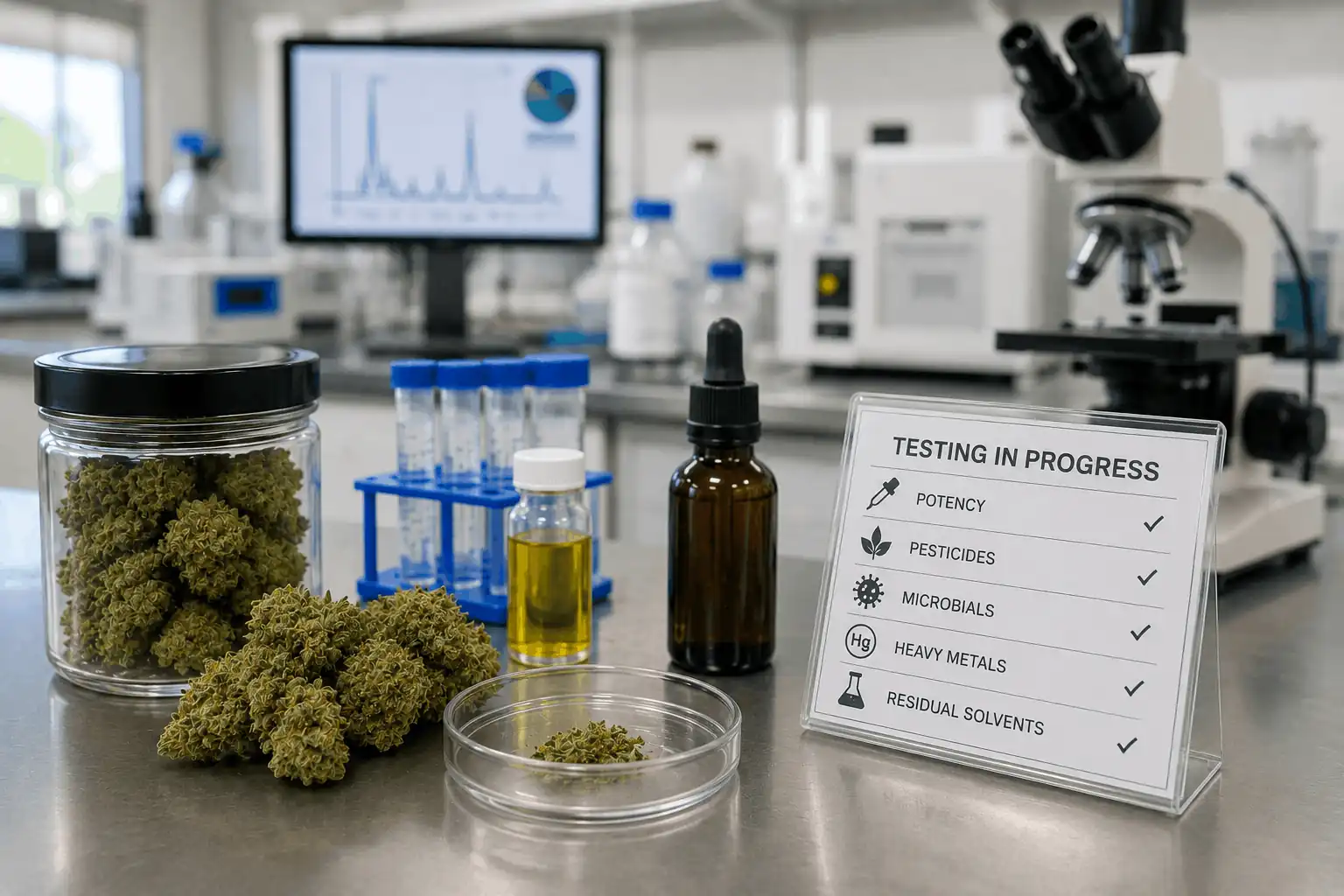
Licensed laboratories test for:
- THC and CBD potency
- Pesticide residues
- Heavy metals such as lead and arsenic
- Microbial contamination including mold and bacteria
- Mycotoxins
- Residual solvents from extraction
- Moisture content and water activity
These testing categories contribute to measurable California cannabis safety statistics across the legal market.
What Do Cannabis Lab Testing Statistics California Show About Compliance?
Public recall and enforcement reports demonstrate that failed products cannot legally reach store shelves.
When products fail testing, regulators may require:
- Product quarantine
- Mandatory destruction
- Product recall
- Fines
- License suspension
Cannabis lab testing statistics California data consistently show that pesticide violations and labeling errors are among the most common compliance issues.
This active oversight strengthens California cannabis safety statistics and separates the regulated market from illegal sellers.
What Exactly Is Tested in California Cannabis Labs?
Below is a simplified breakdown of testing categories.
| Category | Purpose | Consumer Benefit |
| Potency | Measure THC and cannabinoids | Accurate dosing |
| Pesticides | Detect harmful chemicals | Safety assurance |
| Heavy Metals | Detect toxic metals | Prevent contamination |
| Microbials | Identify mold and bacteria | Protect health |
| Residual Solvents | Check extraction purity | Cleaner concentrates |
| Moisture | Monitor stability | Reduce mold risk |
Cannabis lab testing statistics California reports track thousands of batches annually through these required screenings.
How Do California Cannabis Safety Statistics Compare to Other States?
California cannabis safety statistics are often cited as among the most comprehensive nationwide.
Key differences include:
- Testing for over 60 pesticides
- Strict action limits for contaminants
- Mandatory batch-level testing
- Statewide track-and-trace reporting
Some other states test for fewer compounds or allow different remediation processes.
When comparing broader cannabis markets, including discussions around recreational weed South Jersey and NJ dispensary costs, it becomes clear that regulatory compliance impacts pricing and safety everywhere.
Recreational weed South Jersey products must also meet state testing standards. NJ dispensary costs include compliance and lab fees similar to California’s regulated system.
Do Testing Requirements Affect Retail Prices?
Yes. Testing is not free.
Licensed labs charge per batch. Producers must also pay for:
- Compliance tracking
- Packaging updates
- Label accuracy
- Regulatory reporting
These costs influence shelf pricing.
Just as cannabis lab testing statistics California reflect structured oversight, recreational weed South Jersey pricing and NJ dispensary costs include comparable regulatory burdens.
Testing increases consumer protection but also adds operational expenses.
How Can Consumers Verify Lab Results?
California requires transparent labeling. Most licensed products include:
- Batch numbers
- Testing laboratory identification
- QR codes linking to Certificates of Analysis
Consumers can scan these codes to review detailed lab data.
This transparency supports cannabis lab testing statistics California reporting, and strengthens California cannabis safety statistics overall.
In regulated markets such as recreational weed South Jersey, similar labeling systems apply. NJ dispensary costs often include the same compliance standards seen in California.
What Happens When Products Fail Testing?
Cannabis lab testing statistics California show that failed products are not quietly resold.
Possible outcomes include:
- Remediation, if legally permitted
- Destruction of contaminated batches
- Public recall announcements
California cannabis safety statistics regularly include recall notices for transparency.
This system helps protect consumers and reinforce trust in licensed retailers.
Are Cannabis Lab Testing Rules Changing in California?
Yes. Regulations evolve as science improves.
Updates may include:
- Expanded pesticide screening lists
- Adjusted contamination limits
- Refined testing protocols
Tracking cannabis lab testing statistics California over time shows how oversight becomes more refined and protective.
California cannabis safety statistics improve as regulators adapt to emerging risks.
How Should Consumers Use Cannabis Lab Testing Statistics in California?
As a shopper, you should:
- Buy only from licensed retailers
- Review product labels carefully
- Scan QR codes when available
- Ask staff about lab verification
Understanding cannabis lab testing statistics California helps you make informed decisions.
Even when comparing other markets like recreational weed South Jersey or evaluating NJ dispensary costs, testing transparency remains one of the most important consumer protections in legal cannabis markets.
Also read: California cannabis market trends 2026
Frequently Asked Questions
What are cannabis lab testing statistics California consumers should know?
Cannabis lab testing statistics California show that all licensed products must pass third-party testing before retail sale.
Are all California cannabis products lab tested?
Yes. Licensed products must undergo state-required laboratory screening.
What do California cannabis safety statistics reveal?
They show strong compliance enforcement, recall tracking, and mandatory contaminant screening.
Do NJ dispensary costs include lab testing?
Yes. NJ dispensary costs reflect compliance, licensing, and lab testing expenses similar to California.
Is recreational weed South Jersey tested like California products?
Yes. Recreational weed South Jersey products must meet New Jersey’s testing and compliance standards.
Final Thoughts
Cannabis lab testing statistics California highlight one of the most structured cannabis safety systems in the United States.
Testing protects consumers, improves label accuracy, and ensures accountability in the legal market. California cannabis safety statistics show active oversight, transparent recall systems, and strong regulatory enforcement.At Kolas, we support fully compliant, lab-tested cannabis retail so customers can shop with confidence knowing products meet California’s safety standards.